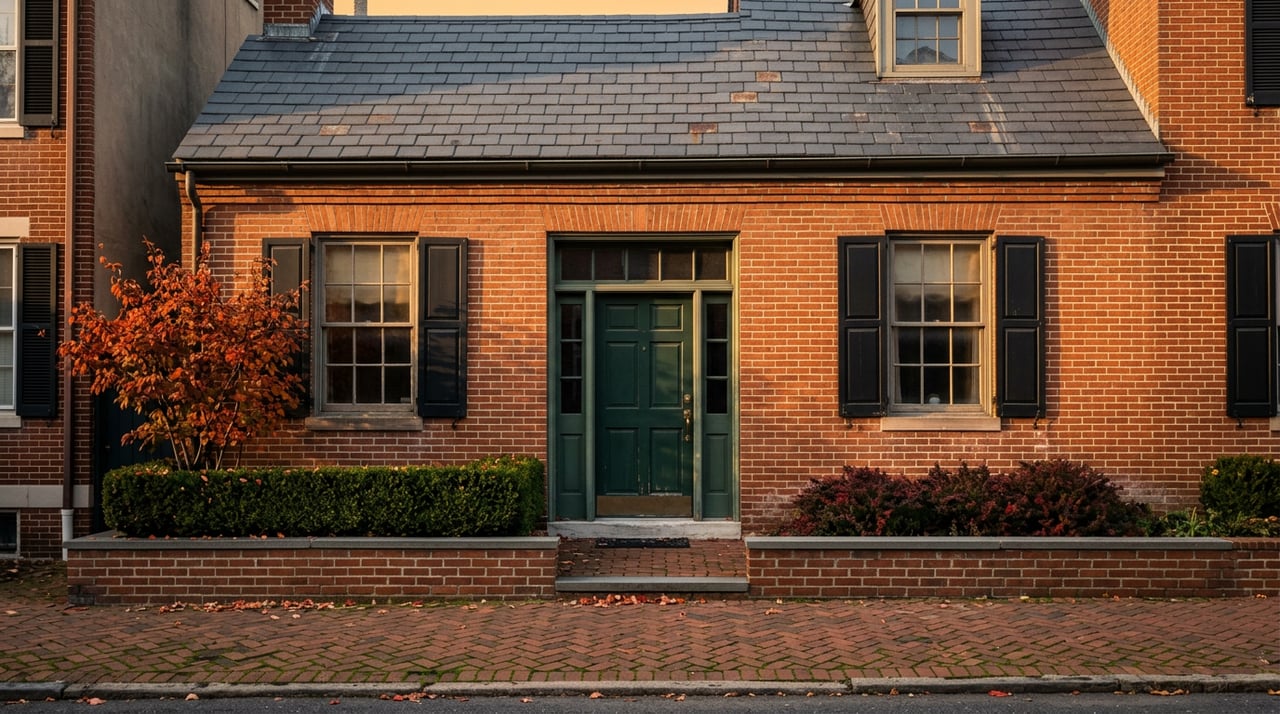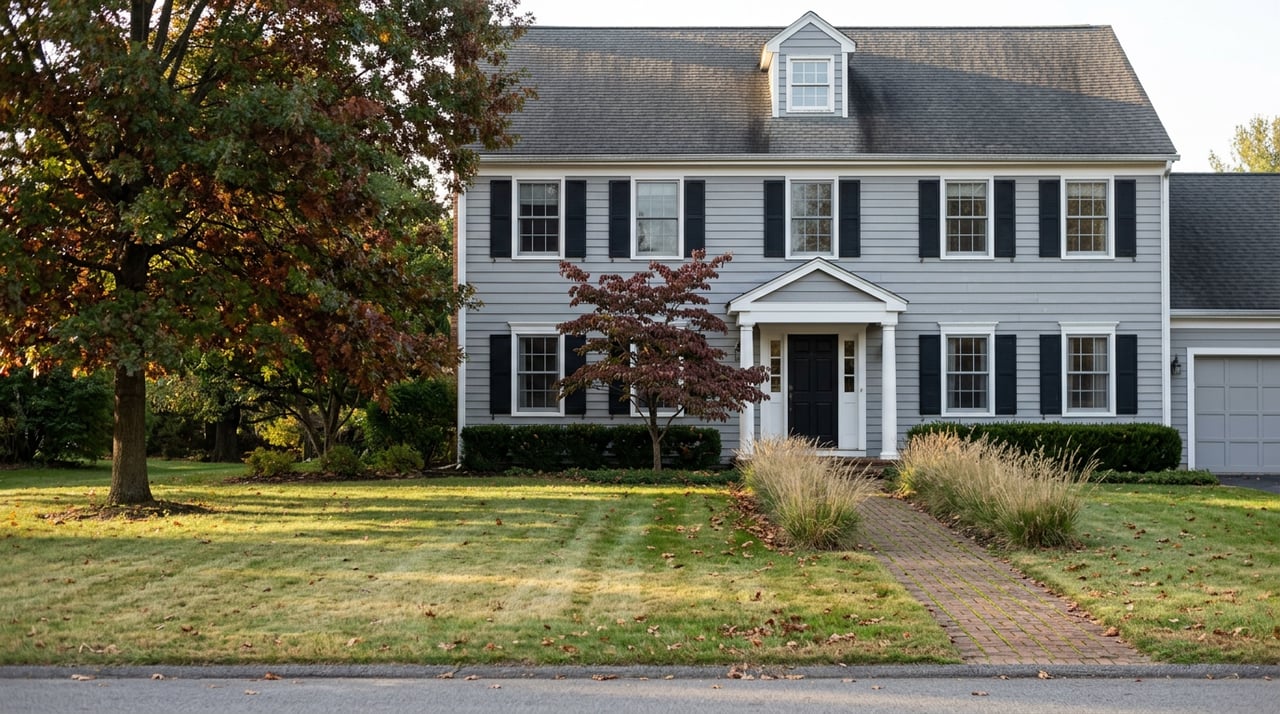
Drive Barley Mill Road in Hockessin any Saturday between now and late November and you will pass two properties that have almost nothing in common except geography. One is a working conservation site where volunteers stand on a hilltop counting hawks. The other is a former du Pont family estate that spent decades as a private garden before anyone but the family ever walked its paths. They sit less than a mile apart. A few minutes further down Little Baltimore Road is a dairy farm that has been in the same family since George Washington was president, and that now sells ice cream flavors nobody would guess from the name.
Most people who live here have visited one of these three places. Fewer have thought about why fall is the season that makes all three worth doing in the same afternoon, and why that window is narrower than it looks.
The road that ties it together
Ashland Nature Center and Mt. Cuba Center are not just nearby neighbors. They sit on the same short stretch of Barley Mill Road, close enough that the Delaware Nature Society itself describes Ashland as being less than a mile from Mt. Cuba. That proximity is easy to miss if you have only ever driven to one or the other with a specific errand in mind, a school field trip, a garden membership visit, a hike with the dog. Strung together, they cover two very different registers of the same landscape: one built for looking closely at wild systems doing what they do without help, the other built by hand over ninety years to show what native plants can do when someone with resources and patience decides to let them.
Woodside Farm Creamery is not on Barley Mill Road itself. It is a short drive further, on Little Baltimore Road, and it adds a third register entirely: a family farm that has nothing to do with conservation or design and everything to do with cows, milk, and a stand that has been serving ice cream since Memorial Day 1998.
Hawk Watch Hill runs on its own clock
Ashland Nature Center covers about 130 acres of woodland, meadow, and marsh along the Red Clay Creek, and it offers four miles of self-guided trails. Most of the year, those trails are simply a good place to walk. From September through November, one of them becomes something more specific.
Hawk Watch Hill, at the center's highest point, sits inside a designated Important Bird Area recognized by the National Audubon Society. Since 2007, the Delaware Nature Society has run a daily raptor migration count there every fall, staffed by a Hawk Watch Coordinator and volunteers who track the birds moving south along the Piedmont flyway. The society estimates roughly 20,000 raptors pass over the hill each fall season, and the count contributes to a continent-wide dataset maintained by the Hawk Migration Association of North America. It is not a one-day festival. It runs daily, 9 a.m. to 4 p.m., for three months, which means the version of Ashland you visit in October is doing something the July version simply is not.
The trail choice matters too. Ashland maintains three named routes that reward different moods:
- The Succession Trail (marked in orange) winds through restored meadow, a pine forest, and mature deciduous woods before returning along the creek floodplain, the best single route for seeing multiple habitat types in one loop.
- The Floodplain Trail (marked in blue) is flatter and simpler, following the Red Clay Creek out to a loop and back.
- The Covered Bridge Loop crosses the Ashland Covered Bridge and circles back on the other side, the shortest of the three.
None of this requires an entrance fee. The visitor center keeps weekday hours, but the trails themselves are open dawn to dusk year round.
Mt. Cuba's fall calendar has a hard stop
Mt. Cuba Center is the more manicured half of this pairing, a native plant garden built on what was once the private estate of Pamela and Lammot du Pont Copeland before it opened to general admission in 2013. Its woodland gardens and ponds are the kind of thing people drive from Philadelphia to see, and the emphasis on native species over ornamentals gives it a different texture than a typical botanical garden built for spectacle.
What matters for anyone timing a fall visit is the schedule. Mt. Cuba's general admission runs Wednesday through Sunday, and for 2026 that fall stretch closes on November 22, with hours shortening to a 4 p.m. close once November begins. After that date, the gardens are closed to public admission until the following spring. The center is also running its History of Mt. Cuba Center Tour on select Saturdays this fall, a one hour walk through the ninety-year transformation from private estate to public garden, for five dollars on top of admission.
That closing date is the detail that turns this from a loose seasonal suggestion into an actual planning problem. Ashland's hawk count runs through the end of November. Mt. Cuba's public season ends a week earlier. For a few weeks each fall, both are open and both are worth the visit, and then one of them simply is not an option again until spring.
The ice cream stand a few minutes further down the road
Woodside Farm Creamery is the least polished stop on this route and, for a lot of longtime residents, the most memorable one. The Mitchell family has worked this same land since 1796, first as a general farm, then for over a century and a half as a dairy operation. The herd was sold off in 1961, and for three decades the farm shifted to crops, eggs, poultry, and pumpkins before Janet and Jim Mitchell brought dairy cows back in the 1990s. The creamery itself opened its stand on Memorial Day 1998, built around ice cream made from the milk of the farm's own Jersey herd.
The flavor board is where the farm distinguishes itself from any ordinary seasonal ice cream stand. Alongside standards like vanilla and chocolate, Woodside has built a reputation on flavors that sound more like inside jokes than dessert, coffee ice cream swirled with green caramel and fudge chunks under the name Motor Oil, or a version of Fluffer Nutter built from peanut butter ice cream and ribbons of marshmallow fluff. The board changes with the seasons, and pumpkin based flavors are a recurring fall fixture, the kind of detail regulars know to ask about once the weather turns.
Why the window closes faster than it feels like it should
None of this is unusual on its own. Plenty of towns have a nature preserve, a public garden, and a farm stand somewhere within driving distance of each other. What is specific to Hockessin is how close together these three sit, and how tightly their fall calendars overlap without actually matching. The hawk count runs through late November. The garden closes November 22. The creamery's flavor rotation follows its own internal logic tied to what the herd is producing and what the season calls for, not a fixed closing date at all.
That mismatch is easy to miss if you treat each place as a separate errand. It becomes obvious the moment you try to plan one afternoon that hits all three, and realize the calendar is quietly narrowing as the weeks pass. The version of this route available in early September, when all three are running at full capacity, is not the same route available the week after Mt. Cuba locks its gates for the winter.
If you already call Hockessin home, that overlap is worth building a Saturday around while it lasts. If you're weighing what a place like this actually offers beyond the listing photos, our Hockessin neighborhood page has more on what day to day life here looks like across the seasons.
Kevin Burkhardt has spent close to four decades working in Delaware real estate and knows this stretch of New Castle County the way longtime residents do, not just as a market but as a place with its own calendar. If you have questions about Hockessin, whether you already live here or are trying to understand what makes it tick before you do, Let's Connect with Kevin Burkhardt.